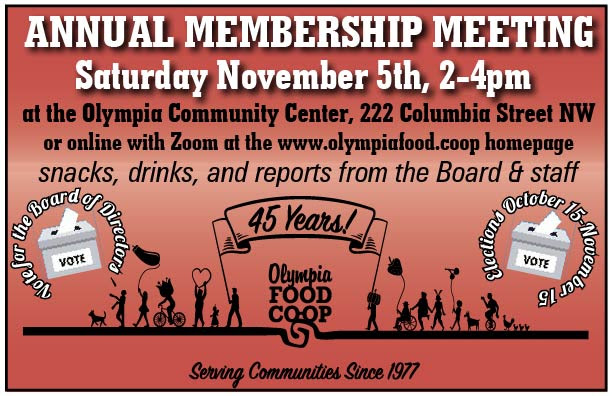
Member Engagement Forums
April 16, 6-8 pm and May 18, 10 am to 1 pm

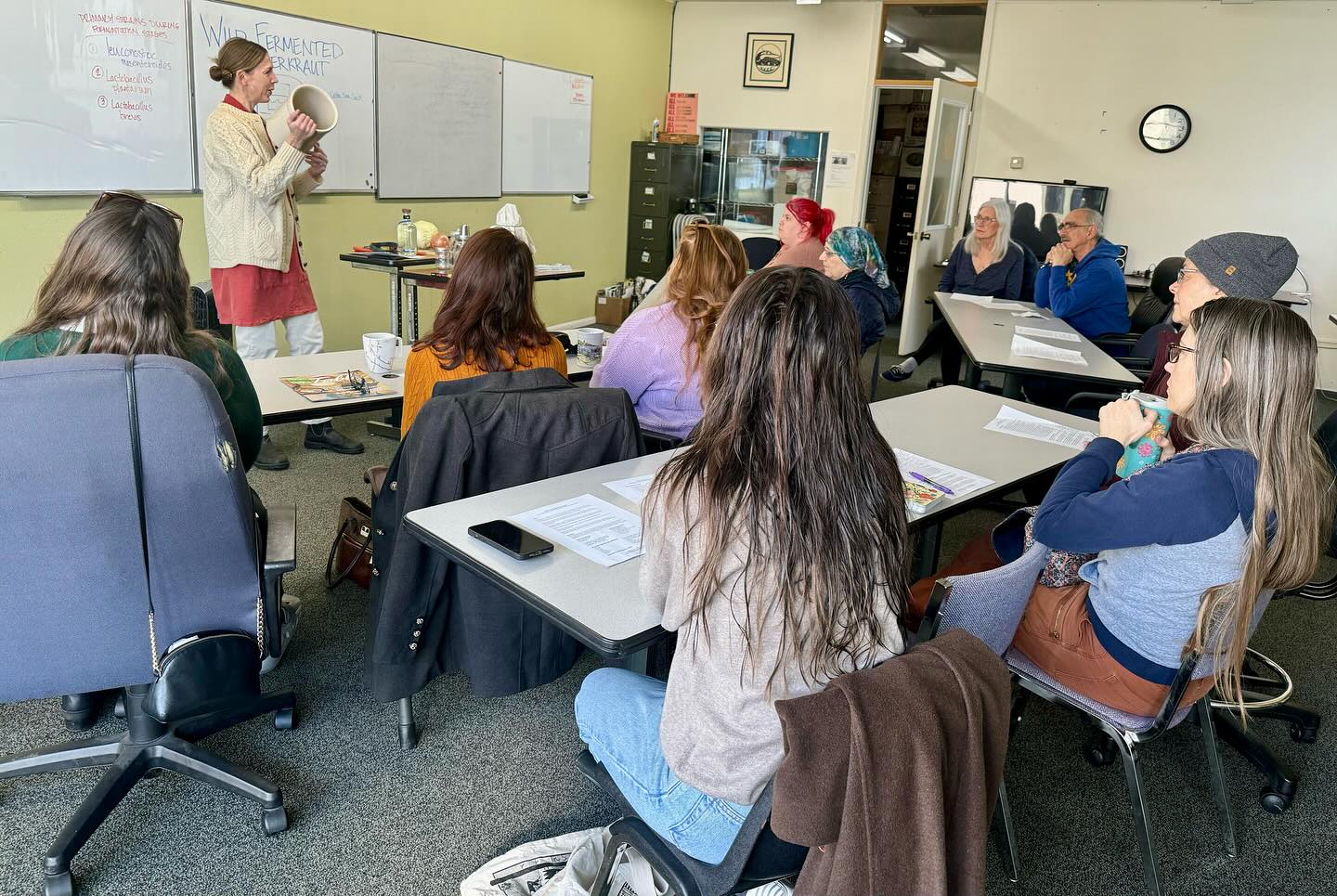
Share some time with the Member Relations Committee of the Board to
discuss some of these areas with us. We’ll have some snacks and drinks and
open time for questions.
Please RSVP at memberrelations@olympiafood.coop
2024 focus–Membership Policies and Procedures
The membership system of the Co-op has evolved over our many years and there
are several values at work behind our policies, probably too many to really list,
but they range from equitable access to affordability to maintaining a sense of
cooperative venture in our success together.
Membership systems and how they work vary quite a bit among food co-ops, and
though membership is fundamental to all cooperatives, not all have the same
high level of member involvement as our own. We would like to gather feedback
from these things from our members, and will have several ways you can offer
your opinion. Two in person options are What does membership mean to us
today and what should the investment be like? How have the times changed in
ways that we should respond as an organization? Our member relations
committee hopes to explore some of these questions, and more, with as large a
portion of our membership as possible in the coming year.
In 2015, we integrated our membership system into our register point of sale
system, allowing shoppers to enter their phone number on the card reader to
verify membership, access electronic receipts, and maintain more accurate
electronic records of payment and purchases. But, there have been some
recognized issues since we made this conversion, such as—
Sharing of memberships- Soon after we converted the system from paper cards only, we
started seeing lots of shoppers entering the phone numbers of friends, spouses, and family
members, effectively sharing member benefits. This inadvertently created an assumption that
we have family or household memberships, which we do not – we only offer individual or
business/organization memberships. Over the 8 years of carrying out this practice, many have
become acclimated and now believe it’s our policy to allow shared memberships. But it isn’t
consistent, so it becomes awkward and confusing at the checkstands. Should we explore a
family or shared membership option?
Discounts and Renewals-
In 2017 we did away with the additional senior and disability discounts that were applied at the
register and created the Cooperative Access Program, or CAP membership. We did this in an
effort to simplify and clarify that the discount should be available only to those who needed it,
since we did receive feedback that there are seniors and people with disabilities who do not
express that need. The CAP membership replaced the 10% Low-income membership. The old
Low-income membership was also good for one year at a time, requiring renewal to affirm that
people still qualified.
Six years later, we’ve seen some problems with this arrangement. There are members who
have perpetual need, and every year we’re asking them to reaffirm that need. This can be
uncomfortable and feel unsupportive for people with permanent disabilities. In 2024 we are
projecting usage of CAP discounts to be around $475,000.
Non-Member Surcharge – There’s been an increased awkwardness and challenge imposing the
non-member surcharge, especially in light of the mistaken assumption that we have shared or
household memberships, and that it is a practice that has become far less common at other
food co-ops. Charging the non member surcharge has sometimes led to customer
dissatisfaction and cashier discomfort. Also, our policy of honoring other food co-op
memberships has sometimes been confusing to apply. In 2024 we project revenue from this
surcharge to be around $15,000.
Equity Payments and Fees – Our membership investment levels have been unchanged for
decades. Many other co-ops have continuing annual investment amounts, creating a steady
influx of revenue for operations and infrastructure. Some think ours is way too low and we
should revise our structure. In 2024, we’re projecting to collect around $6,000 in membership
fees and $21,000 from equity payments.
Here’s the section of our Bylaws that addresses these issues:
II. Membership
1. ELIGIBILITY Membership in the Cooperative is open to any person who meets all qualifications set forth
in these bylaws and who pays a non-refundable membership fee or qualifies for one of our free
memberships. The amount of such fee shall be set by the Board of Directors (the Board). The Board may
designate different classes of membership. The amount of the membership fee may vary for different
classes of members. Any financial obligation of membership may be waived in whole or in part by the
Board.
11. DISCOUNTS AND SURCHARGES Working Members will receive discounts on goods purchased from the
Cooperative. Non-members will pay a surcharge when purchasing goods. The Board shall determine the
procedures and amount of special membership categories and discounts, including Working Member
discounts and non-member surcharges.